


A wide variety of products are produced
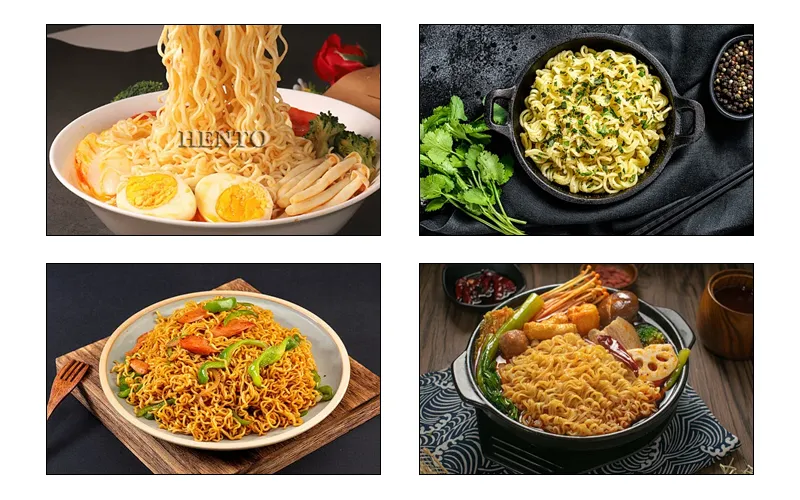
This instant noodle production line has a strong production capacity and can manufacture various types of instant noodles.
Whether it is the traditional fried instant noodles or the healthier non-fried quick-cooking noodles, such as instant noodles, instant rice noodles, self-heating noodles, nutritious noodles, and instant nutritious noodles, etc., it can handle them all with ease.
The rich product range can meet the tastes and needs of different consumers, providing strong support for market expansion.
Rigorous and Scientific Process Flow for Instant Noodle Production Line
Feeding and Mixing
The automatic powder supply system ensures the accuracy and stability of the feeding process, significantly reducing labor costs. After the raw materials such as flour and starch are mixed evenly in the mixing machine, a certain amount of salt water is added. Through the mechanical mixing action of the kneading machine, the gluten protein particles in the wheat flour absorb water and expand, adhering to each other to form a network of elasticity, extensibility, stickiness and plasticity, laying the foundation for the subsequent production.
Resting and Rolling
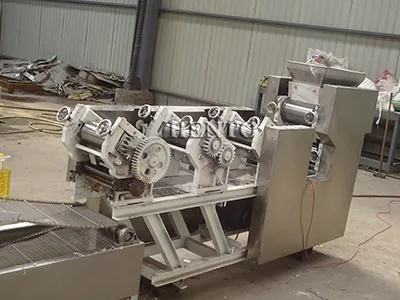
Resting is the continuation of kneading. By placing the kneaded dough in a low-speed stirring container and allowing it to rest at room temperature over time, the processibility of the dough is improved, allowing more water to penetrate fully and evenly into the wheat flour. The dough after resting is then subjected to composite rolling, gradually being pressed into thin sheets, forming face sheets suitable for slicing.
Slicing and Forming
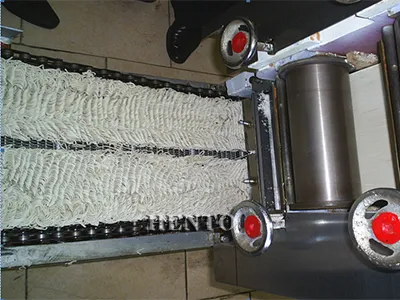
Using a slicing knife, the composite rolled dough is cut into long or round thin noodles. According to product requirements, the shape and size of the slicing can be adjusted, producing different specifications of instant noodles.
Steaming and Drying
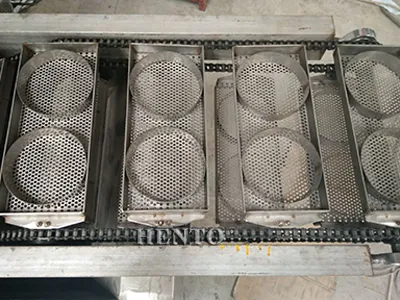
The sliced noodles are steamed in a steaming machine to make them mature and fix their shape. Then they enter the drying process. Oil-fried instant noodles are dehydrated and shaped through high-temperature frying, while non-oil-fried instant noodles use methods such as hot air drying to reduce moisture content. After a long drying process, the moisture is reduced to a safe storage range, extending the product's shelf life.
Packaging and Finished Products
The dried dough sheets are packaged through a fully automatic material arrangement packaging line, placed in bags or cups, bowls, etc., and filled with seasoning packs and oil packs, completing the packaging. After strict quality inspection, the finished instant noodles can enter the market for sale.
Contact now
Outstanding Product Characteristics and Advantages
Diverse Taste
Oil-fried instant noodles have a crispy texture and strong rehydration ability, and can be cooked and eaten in a short time.
Non-oil-fried instant noodles have very low oil content, have a smoother taste, and have the flavor of hand-made noodles in noodle restaurants, meeting consumers' dual pursuit of health and deliciousness.
Efficient Production
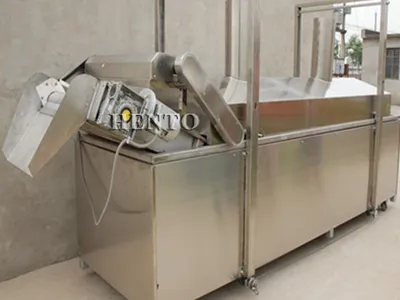
The production line uses automated control, with each process closely coordinated, greatly increasing production efficiency and reducing labor costs.
Energy-saving and Environmentally Friendly
Some equipment adopts technologies such as built-in air circulation and separate exhaust fans, with high drying heat efficiency and low energy consumption.
At the same time, it supports multiple energy sources such as steam, gas, and electricity, allowing for selection based on actual conditions to reduce energy consumption and meet environmental protection requirements.
Simple Operation
A true-color touch screen is used as the operation platform, with an intuitive and simple graphical operation interface that makes various graphics, explanations, settings, logins, and inputs very clear and understandable, reducing operation difficulty and improving production stability.


